
Parent Coaching
What It Is, How It Helps, & Why It Matters

Parenting is one of the most meaningful jobs there is, and it can also be one of the most stressful. Most parents aren’t looking for “perfect.” They’re trying to get through real-life moments: the tantrum in the grocery store, the teen who shuts down, the bedtime battles, the arguing siblings, the child whose anxiety takes over the whole household. Parent coaching exists for exactly this reason: it gives parents practical, evidence-based tools to reduce conflict, build connection, and create a home environment where kids can thrive.

What is Parent Coaching?
Parent coaching is a structured, skill-building process that helps caregivers respond to children’s behavior and emotions more effectively. Unlike therapy that focuses primarily on the parent’s personal history or individual mental health (though that can be important too), parent coaching is often very focused on “what do we do differently starting this week?” It can be used on its own or alongside a child’s therapy.
In parent coaching, you and a trained clinician work together to:
- Clarify what’s happening (triggers, patterns, and stress points)
- Set realistic goals (for behavior, routines, and communication)
- Learn and practice specific strategies (and adjust them based on what works)
- Track progress over time
Coaching can be especially helpful for parents of children with anxiety, ADHD, emotional regulation challenges, oppositional behaviors, trauma histories, autism spectrum differences, or major family transitions (separation, divorce, blended family changes, grief, moves, school shifts).
How parent coaching helps parents
A big part of parenting stress comes from feeling stuck in the same cycle: you try one approach, it fails, everyone escalates, and then you’re left feeling guilty, angry, or defeated. Coaching breaks that loop by giving you a clear plan and consistent support.
Parents often report improvements in:
- Confidence and consistency (less second-guessing, fewer power struggles)
- Communication skills (setting limits without lectures or blow-ups)
- Emotion coaching (helping kids calm down instead of “winning” the argument)
- Parenting stress and burnout (more effective strategies usually means fewer crises)
The CDC notes that for younger children with behavior concerns, behavior therapy training for parents has the strongest evidence among treatments, because it strengthens the parent-child relationship and teaches effective responses to behavior. CDC

How parent coaching helps kids
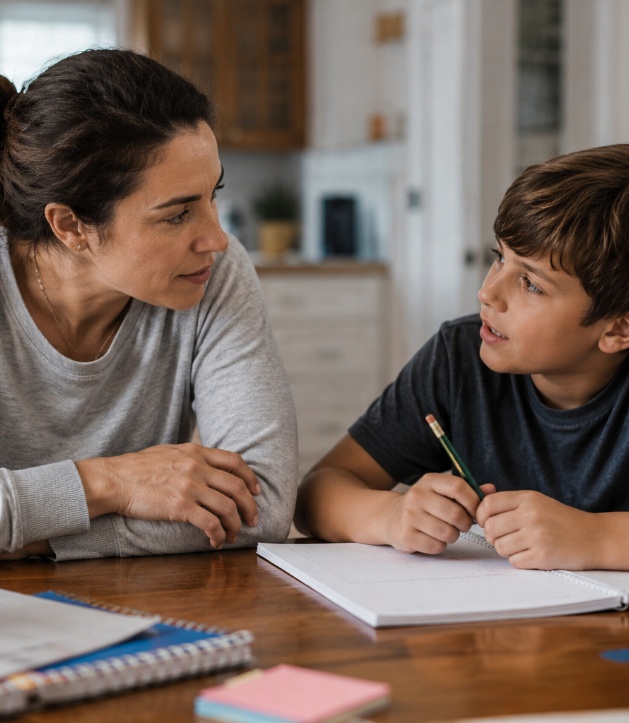
Kids do well when they can, and when they can’t, it’s often because skills are missing: emotional regulation, flexibility, frustration tolerance, problem-solving, or communicating needs appropriately. Parent coaching helps kids build those skills because parents become more effective “coaches” in the moments that matter most, at home.
When caregivers learn consistent, supportive strategies, kids often show gains in:
- Fewer tantrums, outbursts, and defiance
- Better emotional regulation and coping
- Improved attachment and felt safety
- Stronger routines (sleep, homework, morning transitions)
- Better school functioning (because home stress decreases)
The well-studied model that includes real-time parent coaching is Parent–Child Interaction Therapy (PCIT). A meta-analysis found PCIT showed a large improvement in child behavior compared with control/treatment-as-usual. PubMed.
Why it’s so important (especially early)
Parent coaching is not about blaming parents. It’s about equipping them. When families get support earlier, small problems are less likely to grow into entrenched patterns that affect school performance, peer relationships, and mental health over time.
Improving parenting support can shift children’s behavioral and socioemotional trajectories. A CDC summary of the Legacy for Children program reports fewer behavioral and socioemotional problems among children whose mothers participated in a positive-parenting-focused intervention. CDC Archive

What parent coaching typically looks like
Most coaching starts with an assessment phase (what’s happening, when, and why), then moves into teaching and practicing skills. Common tools include:
- Clear, calm limit-setting and follow-through
- Positive reinforcement strategies that actually work (not bribing)
- Predictable routines and transition planning
- Emotion coaching scripts for meltdowns and shutdowns
- Repair skills after conflict (how to reconnect without giving in)
- Co-parenting alignment strategies when applicable
Sessions may be parent-only, include the child for live coaching, or alternate between both depending on your goals.

The bottom line
Parent coaching gives families a path forward that is practical, compassionate, and evidence-based. It helps parents feel more confident and less reactive, and it helps kids feel safer, more understood, and more capable of handling big feelings and everyday demands. The earlier families get support, the more powerful the ripple effect tends to be: calmer homes, stronger relationships, and kids who carry those skills into school, friendships, and adulthood.