

Halloween is usually associated with costumes, candy, pumpkins, and spooky fun. But did you know that trick-or-treating can also support children’s social and emotional development?
For children, Halloween provides natural opportunities to practice social skills, communication, confidence, independence, emotional regulation, and community connection. Even something as simple as walking up to a neighbor’s door and saying “trick or treat” helps a child practice skills they use at school, with friends, and in everyday life.
At Olney Counseling Center in Olney, Maryland, we often help children and teens strengthen confidence, manage anxiety, develop social skills, and build healthier relationships. Halloween offers parents a fun opportunity to encourage many of these same skills outside of the therapy office.
1. Trick-or-Treating Helps Children Practice Social Skills
One of the biggest social benefits of trick-or-treating is the opportunity for repeated, low-pressure social interactions.
Throughout Halloween night, children may practice:
- Greeting other people
- Making eye contact
- Saying “trick or treat”
- Saying “please” and “thank you”
- Waiting their turn
- Responding to compliments
- Complimenting other children’s costumes
- Navigating groups of children
- Respecting personal space
For socially confident children, these interactions may feel easy. For a shy or anxious child, however, walking up to an unfamiliar door and speaking to someone can be a significant accomplishment.
The nice thing about trick-or-treating is that children get to practice the interaction repeatedly. If one house feels awkward, another opportunity is usually only a few steps away.
2. Halloween Can Build Confidence in Children
Trick-or-treating can give children manageable opportunities to step outside their comfort zones.
A child may begin the evening wanting a parent to walk all the way to the door. After a few houses, they may be willing to approach with a sibling or friend. Eventually, they may feel confident enough to knock on the door themselves.
These small successes help children develop confidence and self-efficacy, or the belief that they are capable of handling new or challenging situations.
Instead of simply hearing, “You can do it,” the child gets to experience, “I did it.”
3. Trick-or-Treating Encourages Emotional Regulation
Halloween can bring a surprising number of emotions.
Children may experience excitement, anticipation, nervousness, disappointment, frustration, fear, or sensory overload, sometimes within the same hour.
A costume might feel uncomfortable. A house may have scary decorations. Another child may cut in line. Someone may receive a different piece of candy. A child may also become tired, overstimulated, or frustrated.
These situations provide natural opportunities to practice emotional regulation, flexibility, patience, and coping skills.
Parents can help by acknowledging their child’s feelings while encouraging them to problem-solve and continue when appropriate.
4. Halloween Provides Opportunities for Independence
Developing independence is an important part of healthy childhood development.
Halloween provides many small opportunities for children to practice age-appropriate independence. A child might choose which house to visit next, carry their own candy bag, remember to say thank you, walk slightly ahead of a parent, make decisions with friends, or decide that a particular house feels too scary and skip it.
Older children and teens may be ready to trick-or-treat with friends without a parent directly beside them, depending on their age, maturity, neighborhood, and family rules.
Gradually giving children appropriate choices helps strengthen decision-making, responsibility, independence, and confidence.
5. Trick-or-Treating Teaches Social Awareness and Empathy
Halloween is not just about getting candy. Children also have to navigate a community experience.
For example, they may need to wait while younger children approach a doorway, make room for another group, respect someone’s decorations and property, follow neighborhood expectations, or notice when another child feels frightened or left out.
These experiences help children develop empathy, patience, cooperation, and social awareness.
Parents can reinforce these skills with simple comments such as, “Let’s give those little kids some room,” or “That was kind of you to wait for her.”
6. Halloween Can Help Children Feel Connected to Their Community
A strong sense of belonging is important for children’s social and emotional well-being.
During trick-or-treating, children may see neighbors, classmates, teachers, friends, and familiar families. Streets that normally feel quiet may suddenly fill with people talking, laughing, and spending time together.
These positive community interactions help children feel that they are part of something larger than their immediate household.
For families who are new to an area, Halloween can also be an easy way to meet neighbors and feel more connected.
7. Trick-or-Treating Can Help Children With Social Anxiety
For children with social anxiety or shyness, Halloween can provide opportunities to practice social interactions in small, predictable steps.
However, parents should avoid turning Halloween into a test.
A child who is anxious might:
- Practice saying “trick or treat” at home first
- Start with familiar neighbors
- Trick-or-treat with one trusted friend
- Let a sibling speak first
- Visit only a few houses
- Take breaks when overwhelmed
- Avoid particularly crowded or frightening areas
The goal does not have to be visiting the most houses or collecting the most candy. For one child, success might simply mean approaching one unfamiliar door and speaking clearly enough to be heard. That accomplishment matters.
8. Halloween Can Strengthen Family Connections
The emotional benefits of Halloween for children are not limited to trick-or-treating.
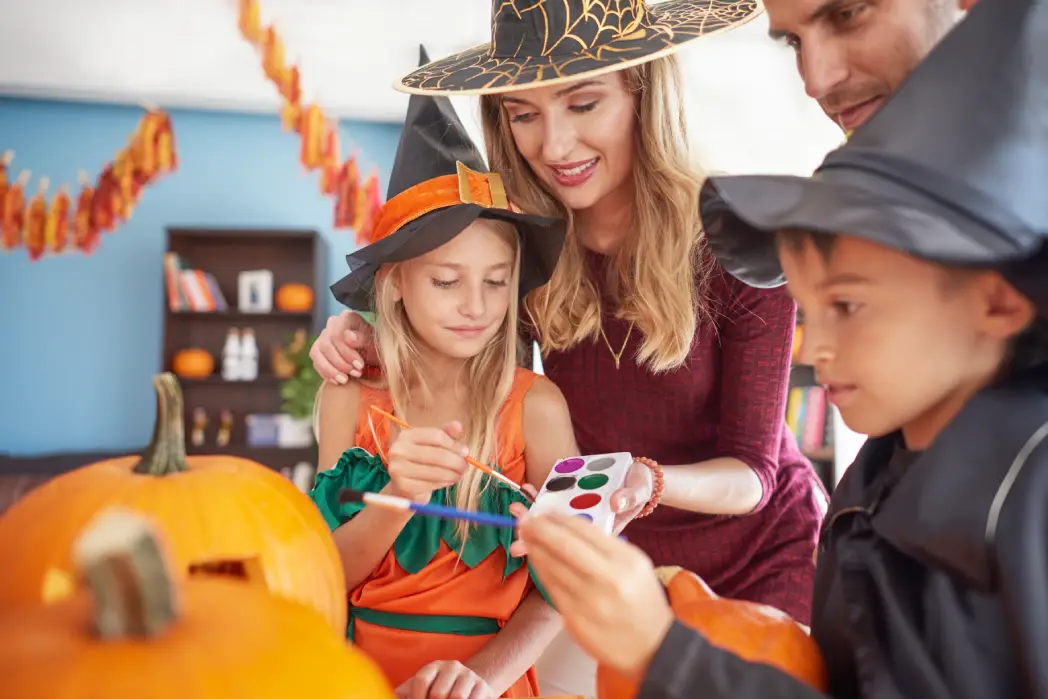
Choosing costumes, carving pumpkins, decorating the house, walking through the neighborhood, taking pictures, sorting candy, and talking about the evening afterward all create opportunities for family connection.
Traditions provide children with predictability and a sense of belonging. They also create shared memories.
Years later, children probably will not remember every piece of candy they received. They may, however, remember dressing up with their siblings, walking through the neighborhood with their parents, or laughing together at the end of the night.
Halloween Does Not Have to Be Perfect to Be Beneficial
Parents do not need to turn trick-or-treating into a social skills lesson. Part of what makes Halloween valuable is simply that it is fun.
Underneath the costumes and candy, however, children may be practicing skills they will use throughout their lives: approaching others, managing uncertainty, coping with disappointment, respecting boundaries, making decisions, navigating friendships, and trying things that feel a little uncomfortable.
Parents can support this growth by offering encouragement without pressure and allowing children to participate at a level that feels manageable.
Sometimes social and emotional growth happens in unexpected places, including while wearing a superhero costume and carrying a plastic pumpkin full of candy.
Frequently Asked Questions About Halloween and Child Development
Is trick-or-treating good for children’s social skills?
Yes. Trick-or-treating gives children opportunities to practice greetings, conversation, eye contact, manners, turn-taking, patience, and interacting with people outside their immediate family.
Can Halloween help a shy child become more confident?
Halloween can provide small opportunities for shy children to practice approaching and talking with other people. Parents can help by starting with familiar homes and gradually allowing the child to take more initiative.
What if my child has social anxiety and does not want to trick-or-treat?
Avoid forcing participation. Instead, consider modifying the experience by visiting only a few houses, going with a trusted friend, practicing beforehand, or choosing another Halloween activity. Small steps can still be meaningful.
What if my child becomes overwhelmed while trick-or-treating?
Crowds, costumes, noise, darkness, decorations, and excitement can become overwhelming for some children. Taking breaks, choosing quieter streets, shortening the evening, and letting your child know it is okay to stop can all help.
How can parents make Halloween a positive social experience?
Focus less on how much candy your child collects and more on having fun together. Encourage kindness, independence, good manners, flexibility, and connection while allowing your child to participate at a comfortable pace.
Child and Teen Therapy in Olney, Maryland
If your child struggles with social anxiety, friendships, confidence, emotional regulation, ADHD, anxiety, or social situations, additional support may help.
At Olney Counseling Center, our child and teen therapists help children develop practical skills for managing emotions, building confidence, improving relationships, and navigating social situations.
We work with children, teens, and families in Olney and throughout Montgomery County, Maryland, with treatment tailored to each child’s individual needs. Contact us or call 301-570-7500 to learn more.
Halloween may only happen once a year, but the social and emotional skills children practice along the way can benefit them throughout the year.